Circle · 2026 · Lead Product Designer
Arc Studio
An AI development environment that turns a prompt into a deployed onchain app.
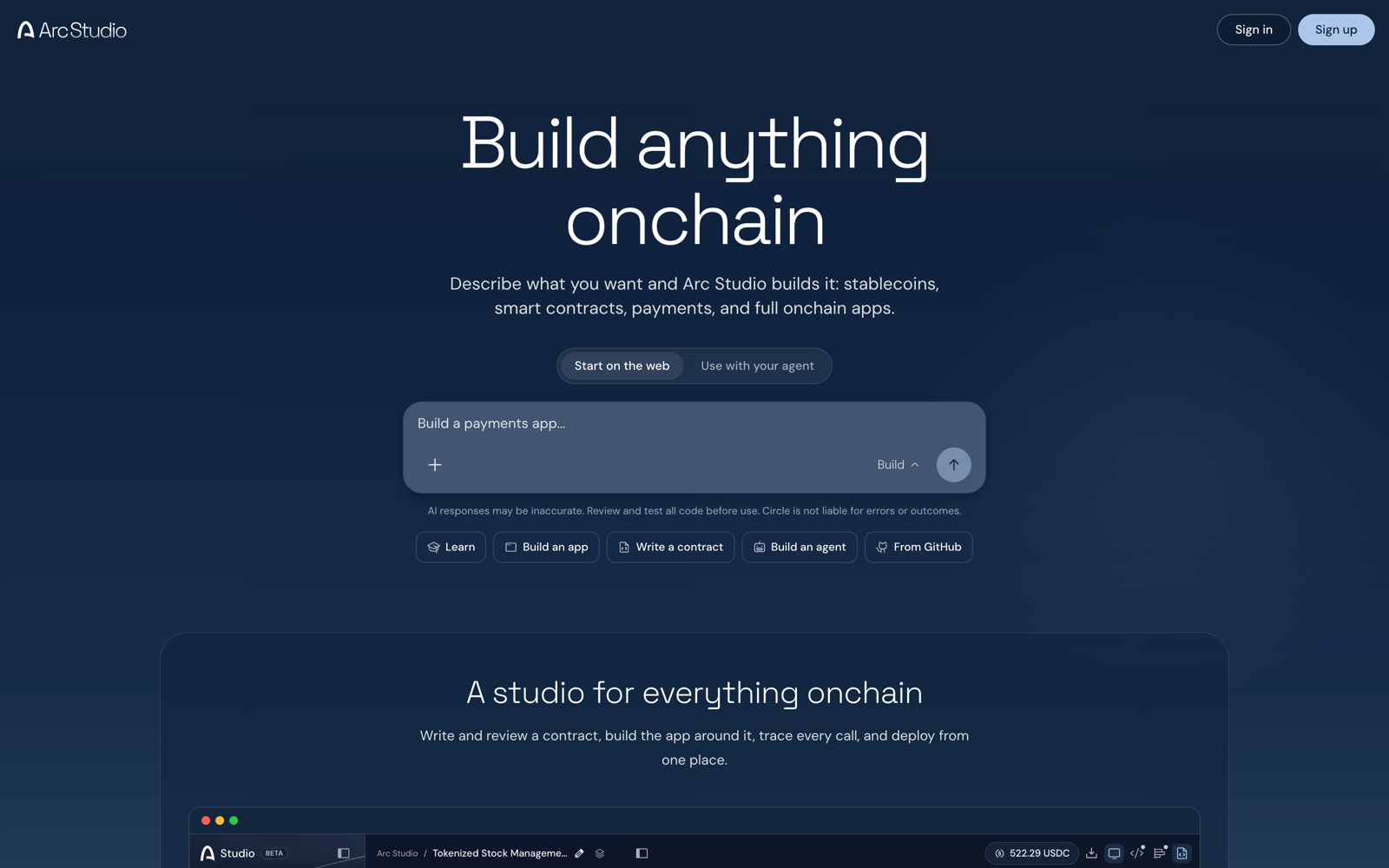
- Sept 2026
- Public launch
- Frontend, backend, contracts
- Generated from one prompt
- First
- Arc surface with organic social momentum
The problem
Arc is Circle’s Layer 1 for stablecoin finance. When it launched, building on it meant what building on any chain means: set up a wallet, pick an SDK, learn a contract toolchain, wire a frontend, find testnet funds — and only then see anything work. The first hour was configuration, not creation.
We wanted the first five minutes on Arc to feel like describing an idea. Internally the project was called Origin; it shipped as Arc Studio.
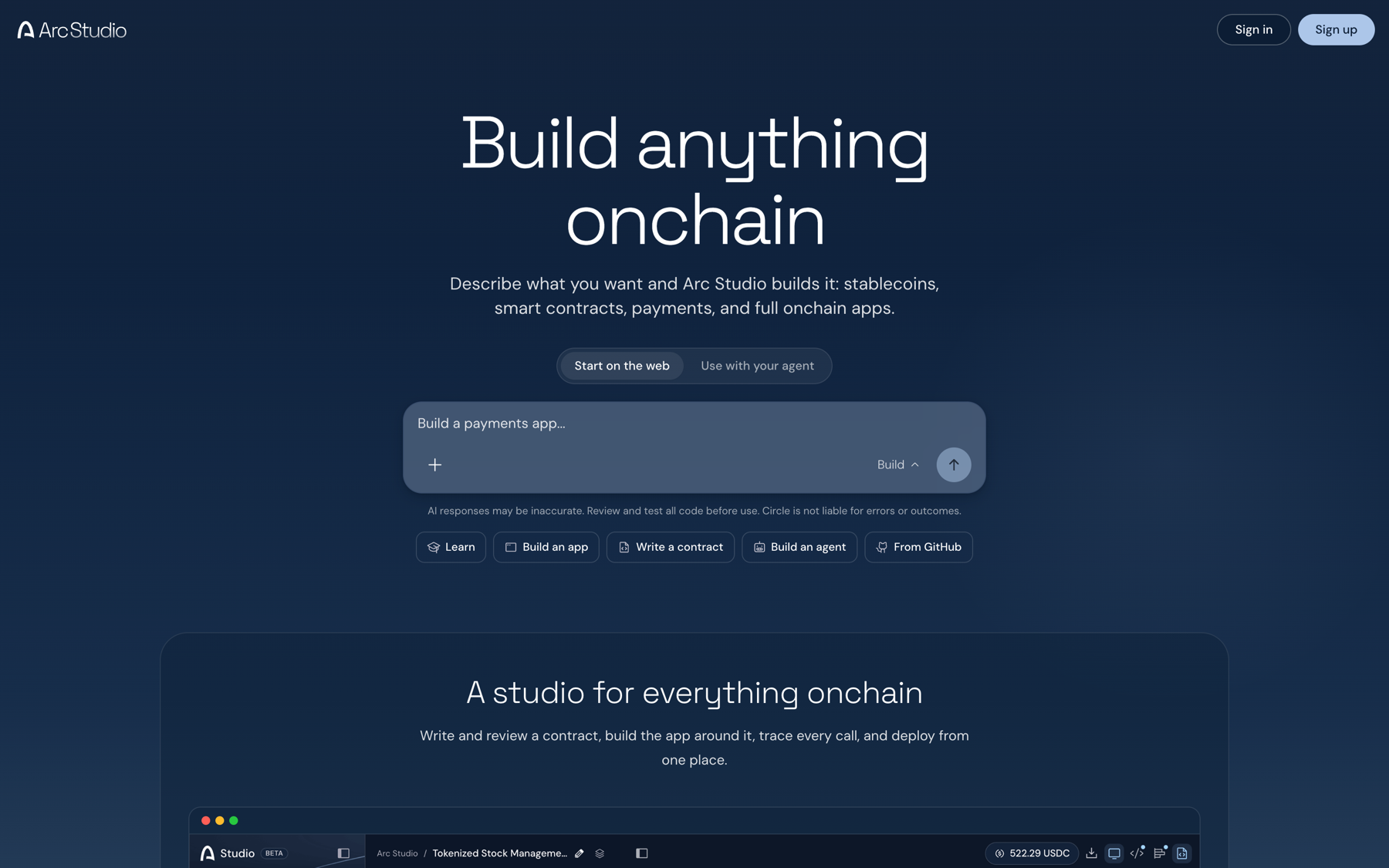
My role
I was the product designer on Origin from before it had a product shape. I helped establish the original vision for an AI development environment on Arc, then designed the end-to-end experience — and built the prototype the team tested against.
Designing the whole loop
An AI development environment has more states than a normal app, and most of them are waiting states. The design work was less about screens than about what the user sees while the machine is thinking.
- First prompt — the empty state that has to make “build a payments app” feel like a reasonable thing to type.
- Planning and progress — showing the plan before the code, and progress as it’s written, so the wait feels like watching rather than waiting.
- IDE controls and preview — when to show code, when to show the running app, and how to keep both honest with each other.
- Threading — a conversation that can branch when the user changes their mind halfway.
- Login, settings, new-app flows, and every empty state in between.
Prototyping in the repo
Instead of a Figma click-through, I built and deployed a repository-backed UX prototype. It ran the real interaction model — prompt, plan, progress, preview — with mocked generation, so the team could feel the timing and the state changes rather than imagine them.
Alongside it I wrote a detailed product-context implementation artifact: the flows, states, copy, and rationale in one document engineering could build from directly. The prototype answered “how should this feel,” the artifact answered “what exactly do we build.”
01
Vision
Helped define what an AI dev environment on Arc should be and who it was for.
02
End-to-end design
Every state from first prompt to deployed app, including the unglamorous ones.
03
Working prototype
Repository-backed, deployed, and used for internal walkthroughs and testing.
04
Implementation artifact
Product context engineering built against; kept current as the product evolved.
05
Launch
Origin became Arc Studio and launched publicly in September 2026.
Outcome
Arc Studio launched on September 17, 2026. It generates frontend, backend, and smart-contract code from a description, and works either on the web or driven from a developer’s own agent.
Internally it’s described as Arc’s strongest high-intent developer surface and the first Arc product with genuine organic social momentum — people sharing what they built, daily, without being asked.