Circle · 2025–26 · Lead Product Designer
Arc Portal
An Arc-native financial account: fund, earn, swap, send, and give an agent a wallet.
- Hours
- From product definition to a working prototype in the repo
- 11
- User interviews synthesized into the launch iteration
- Mainnet
- Launched with Arc
The problem
Arc needed a front door for people, not just developers. Someone arriving at a new chain has the same three questions every time: how do I get money onto it, what can I do with it, and how do I get it back out. Then a fourth, new question for 2026: how do I let my agent use it.
Portal is the answer to all four in one place.
My role
I defined the product, built the first working prototype, ran the research, and iterated the launch version. After launch I took over primary design coordination for Portal.
Defining the product
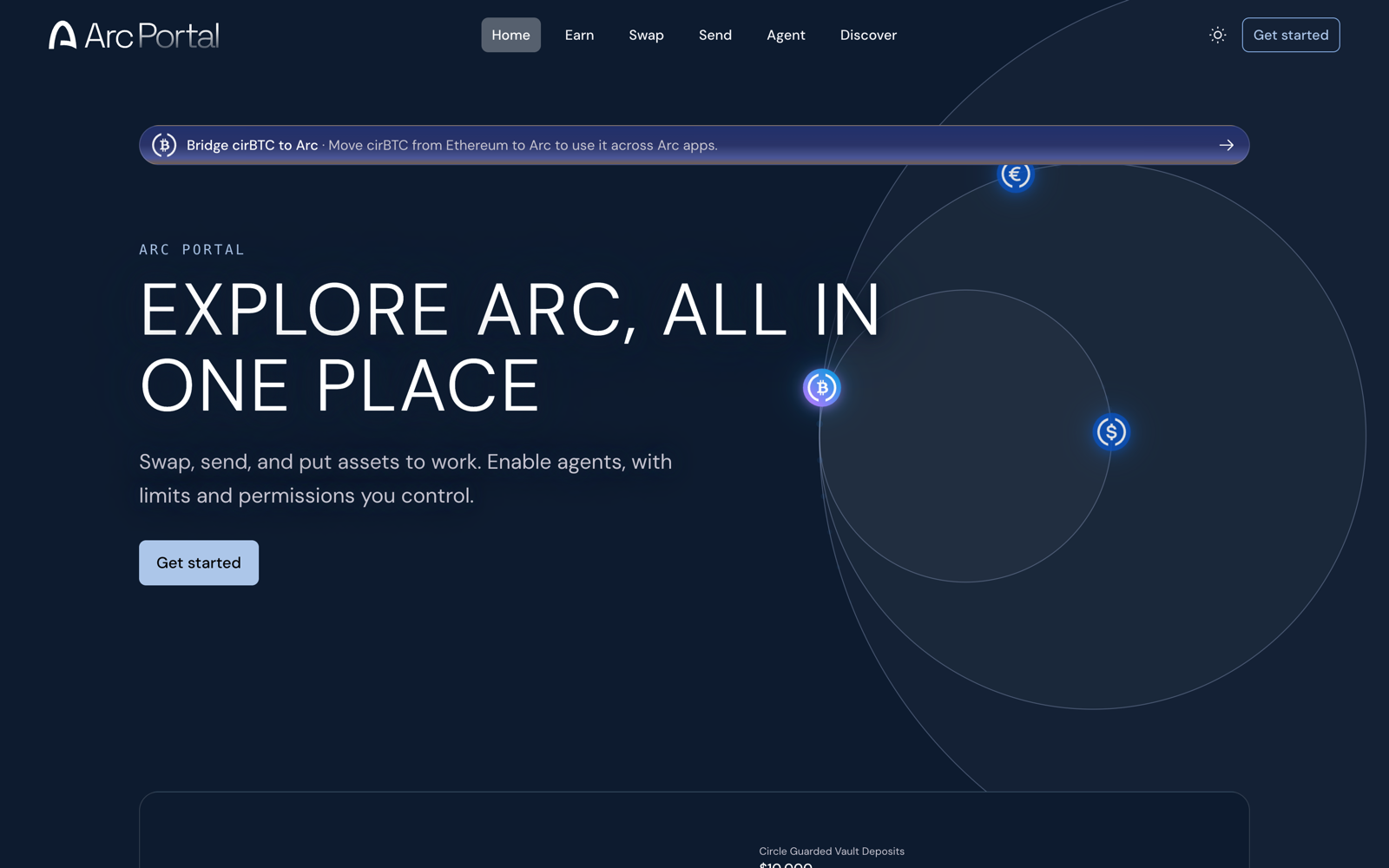
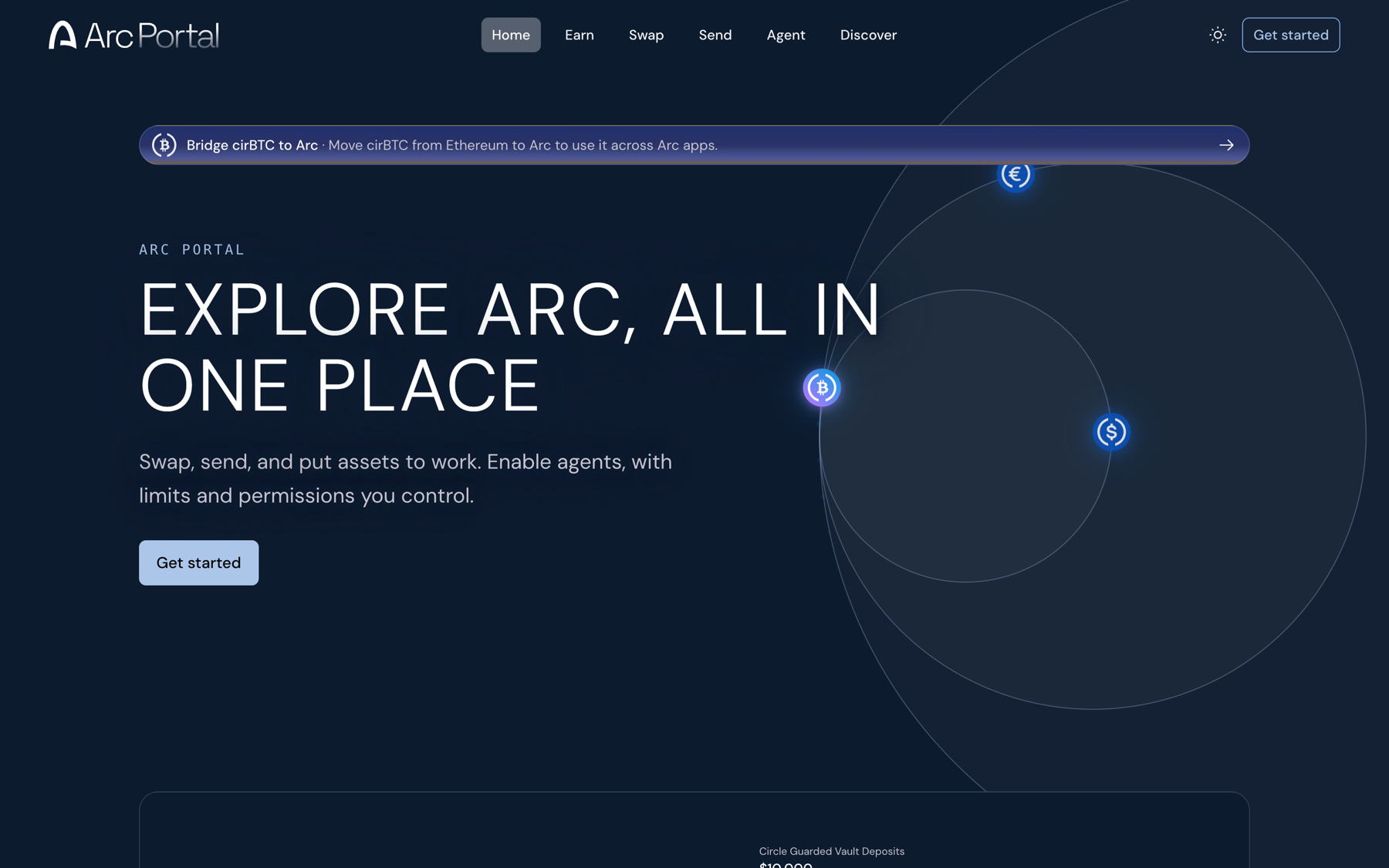
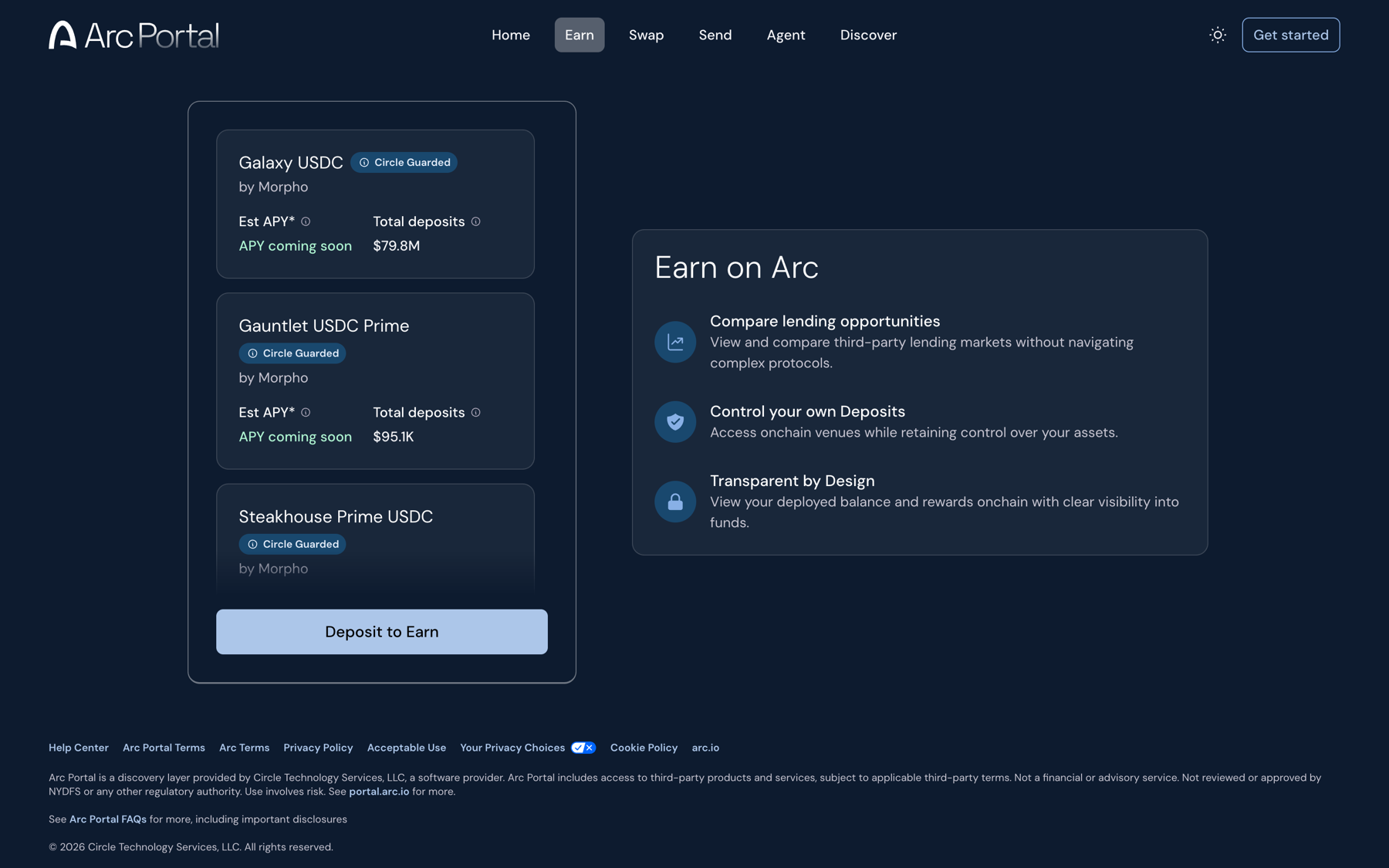
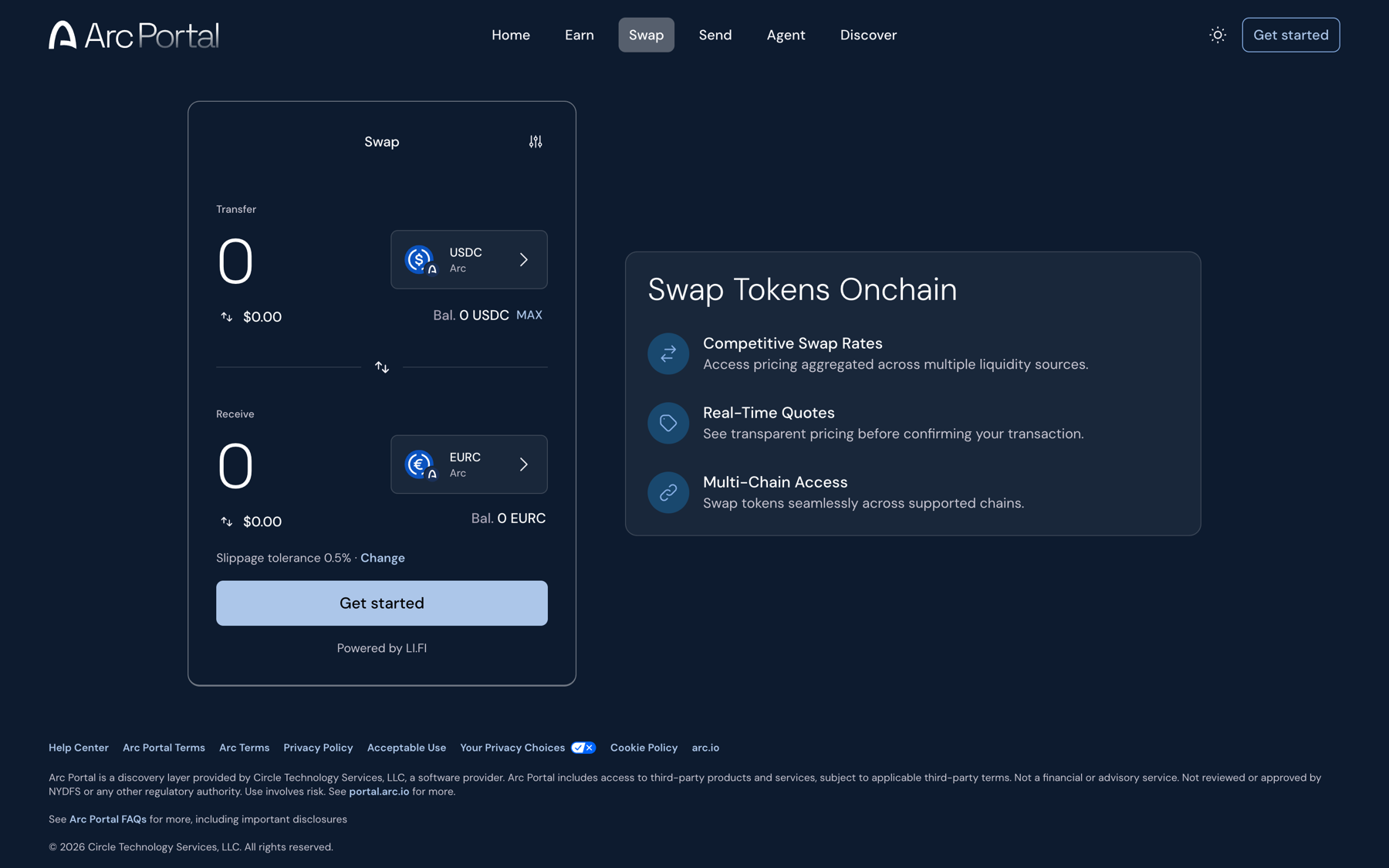
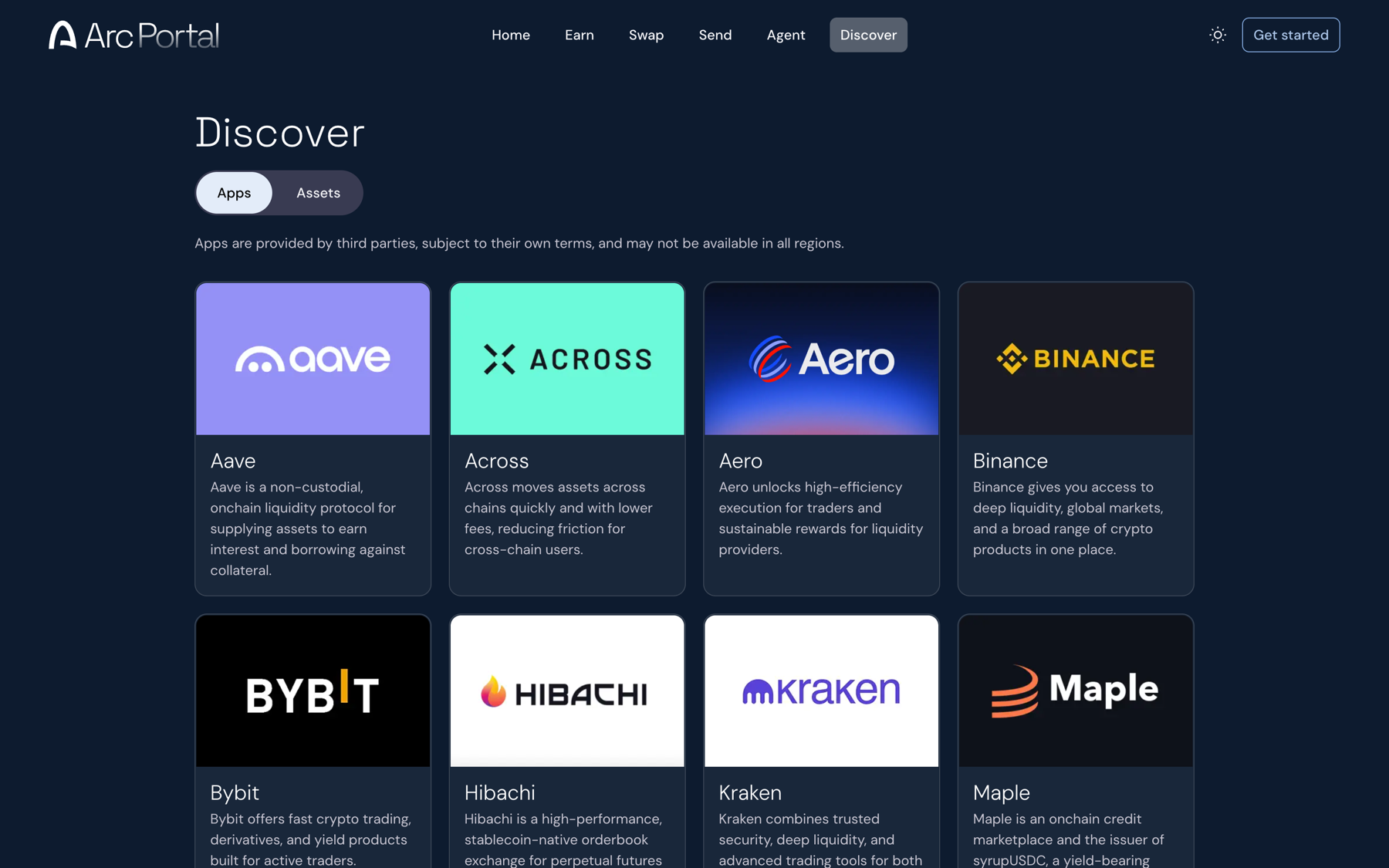
The first job was deciding what Portal was. Not a wallet, not an explorer, not a DeFi dashboard — an Arc-native financial account: one surface spanning wallet funding, earn, swap, send, ecosystem discovery, and agent wallets.
That framing did a lot of work. It kept the team from building six apps, and it gave every feature a shared mental model: this is your account on Arc, and these are the things an account can do.
Prototype first
With the definition agreed, I built a working prototype directly in the repository — in a few hours, not a sprint. It wasn’t polished, but it was real: real navigation, real state, real flows you could click through on a phone.
That prototype became the artifact for everything that followed. Leadership aligned on it. Engineering scoped from it. And it’s what we put in front of users.
Research
I ran and synthesized 11 user interviews on the prototype and early builds. The signal was clear on both sides:
What worked — visual trust, simplicity, the swap flow, and the agent experience. People understood “give your agent a wallet” faster than we expected.
What didn’t — the difference between a wallet balance and an Arc balance, what happens cross-chain, how risky “earn” actually is, and how withdrawal works. All four are conceptual, not visual; all four fed the launch iteration and the post-launch queue.
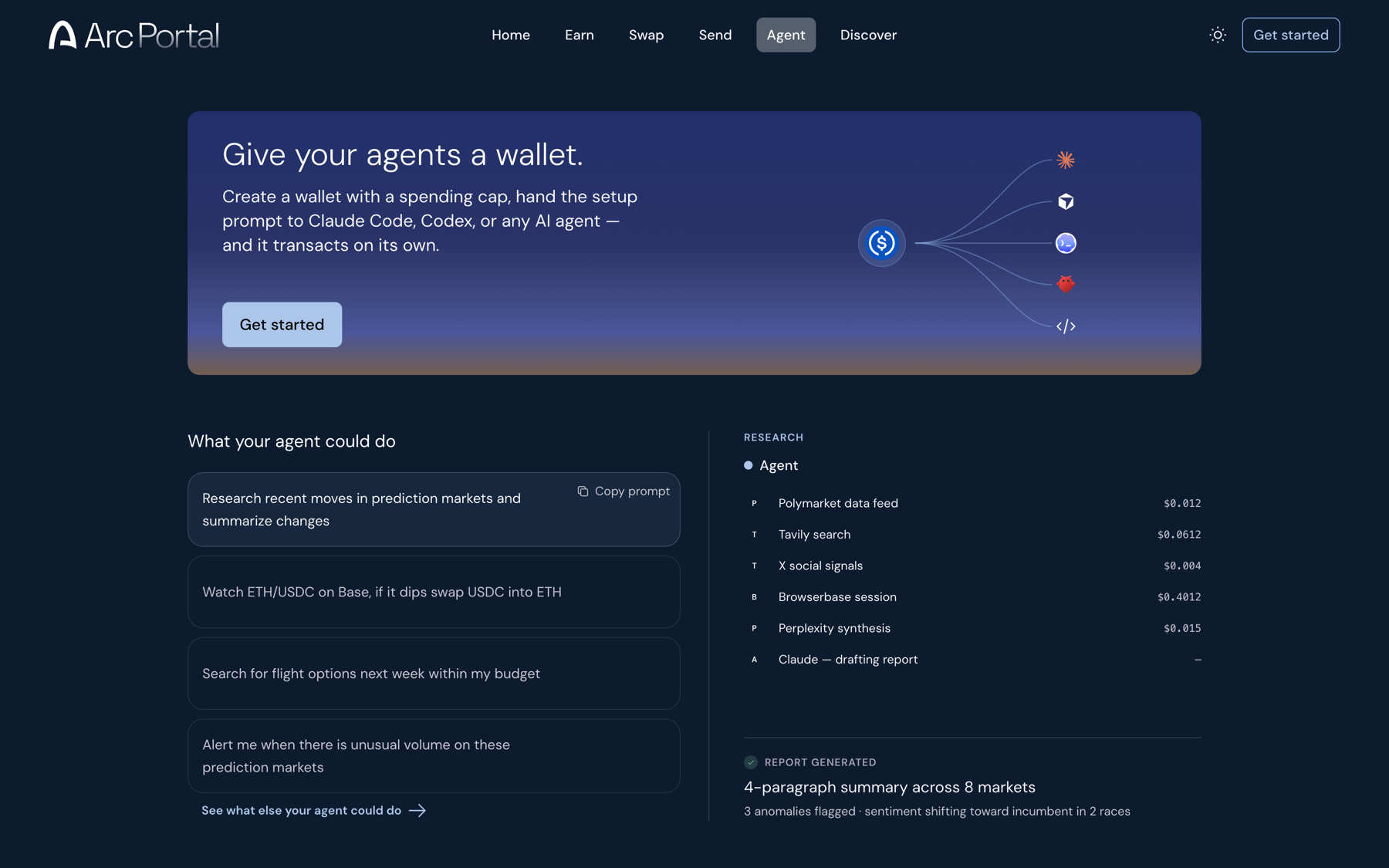
Agent wallets
The agent flows were the part of Portal with no precedent. I designed the setup and funding experience around one idea: a spending cap is the whole product. A person doesn’t want to configure an agent’s wallet; they want to say “here’s $20, go,” and be sure it can’t become $200.
Outcome
Portal launched as part of Arc mainnet and now exposes earn, send, swap, discovery, and agent-wallet functionality. Post-launch, the research findings became the iteration roadmap — starting with the balance model and withdrawal clarity.